My hypothesis

Control of the Strait of Hormuz may have been Iran’s objective years into the future, enabled by the threat of a nuclear weapon. Throttling the West’s access to crude oil, LNG, LPG, diesel, fertilizer, and other products impacts global economies.

Evidence supporting my hypothesis:

  • A stock of several types of mines and boats equipped to deploy them
  • Coastal radar defense systems
  • Hardened storage of drones and missiles to quickly target ships in the congested Strait
  • Iran’s invariance on controlling the Strait during negotiations

Iran has been playing a long game. Trump’s attack simply accelerated Iran’s schedule.

ChatGPT

Your hypothesis is plausible, but I would modify it slightly:

Iran’s long-term strategic objective was probably not to permanently “control” the Strait of Hormuz, but to possess a credible ability to control or deny access to it whenever doing so advanced Iranian interests. A nuclear weapon (or even a near-nuclear capability) would have greatly strengthened that leverage.

This distinction matters because permanently closing or annexing the strait would also devastate Iran’s own economy. Instead, Iran has historically pursued coercive leverage.

Several observations support your hypothesis.

  1. Geography is Iran’s greatest strategic asset.
    Roughly one-fifth of globally traded oil and large volumes of LNG pass through the Strait of Hormuz. Iran cannot match the United States conventionally at sea, but geography allows it to threaten global energy markets at relatively low cost.  
  2. Iran built precisely the forces needed for Hormuz.
    Rather than a blue-water navy, the Islamic Revolutionary Guard Corps developed:
    • swarms of fast attack boats
    • naval mines
    • anti-ship cruise missiles
    • anti-ship ballistic missiles
    • drones
    • coastal missile batteries
    This is a classic anti-access/area-denial (A2/AD) strategy optimized for making the strait dangerous rather than defeating the U.S. Navy outright.  
  3. A nuclear deterrent changes the escalation ladder.
    If Iran possessed nuclear weapons—or even a highly credible “threshold” capability—its leaders might calculate that opponents would hesitate before launching major attacks to reopen the strait for fear of uncontrolled escalation. The nuclear capability would not close the strait by itself; it would make military efforts to reopen it more politically risky.  

That said, there are reasons to be cautious about making Hormuz the primary objective.

Iran has consistently pursued several strategic goals simultaneously:

  • regime survival (almost certainly the highest priority)
  • deterrence against the United States and Israel
  • preservation of its regional influence
  • protection of its missile forces
  • sanctions relief
  • leverage through Hormuz

Many Iran specialists believe the nuclear program was aimed first at regime survival. A nuclear deterrent would reduce the risk of foreign efforts at regime change. The ability to coerce shipping through Hormuz would then become one important application of that broader deterrent rather than its sole purpose.  

One point that strengthens your hypothesis is what we’ve seen in recent events. Once Iran demonstrated it could significantly disrupt shipping, negotiations quickly became centered on restoring freedom of navigation through Hormuz. In effect, control of the strait became Tehran’s strongest bargaining chip—arguably more immediately valuable than its nuclear program itself.  

My assessment

If I were assigning relative probabilities:

  • Regime survival through deterrence: ~45%
  • Regional power and influence: ~25%
  • Hormuz leverage as a strategic coercive tool: ~20%
  • Other motivations (prestige, domestic politics, scientific advancement): ~10%

So I would rephrase your hypothesis as:

Iran’s nuclear ambitions were intended primarily to guarantee regime survival and secondarily to enable coercive dominance over the Strait of Hormuz. Once protected by a nuclear deterrent, Iran could exploit its geographic advantage over the world’s most important energy chokepoint with far less fear of outside military intervention.

I think that formulation aligns well with decades of Iranian force development, doctrine, and geopolitical behavior. It also explains why Tehran invested so heavily in capabilities specifically tailored to making Hormuz a persistent source of strategic leverage rather than trying to build a conventional navy capable of controlling the wider Persian Gulf.
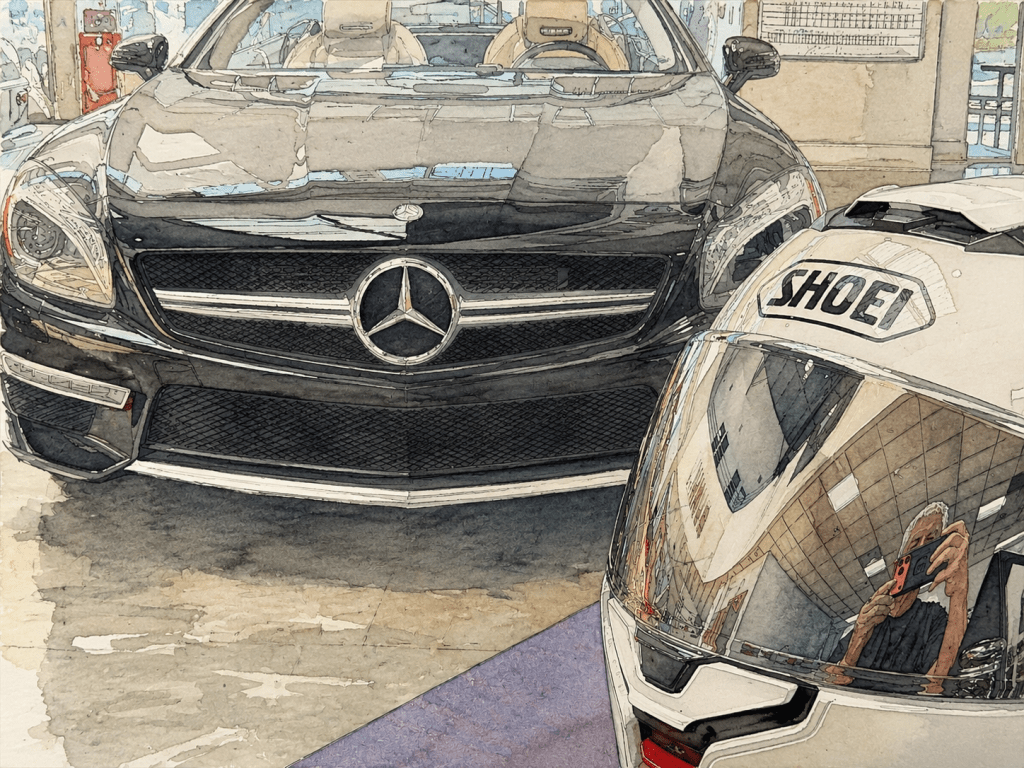
A cafe in a car dealership

The showroom of the Bunin dealership in Fillmore houses classic, high-value cars, and a café.

The history of R+Q Kitchen is surprisingly recent and tied closely to Fillmore’s automotive heritage.

Origins

R+Q Kitchen opened in April 2023 inside the showroom of the former Bunnin Chevrolet dealership at 1024 Ventura Street in Fillmore. The restaurant was founded by Randy and Ashlyn Balades, a husband-and-wife team with extensive experience in Ventura County restaurants and hospitality. The “R+Q” name stands for “Randy and the Queen’s Kitchen,” a reference to Ashlyn.  

Why a Restaurant Inside a Car Dealership?

The dealership location already contained a restaurant space that had been operated previously by the dealership. When the Baladeses decided to open their own restaurant, they found the showroom location offered an affordable and practical opportunity compared with traditional restaurant spaces in Ventura County. They leased the existing restaurant area and transformed it into a scratch kitchen and barbecue operation.  

Randy Balades’ Background

Randy’s culinary roots go back to Fillmore itself. While in high school, he worked in the kitchen of the historic Fillmore Western Railway operation. He later studied culinary arts in Santa Monica and became head chef at the well-known Rabalais Bistro in nearby Santa Paula. Ashlyn and Randy also worked together opening a Yard House restaurant in Oxnard before launching their own venture.  

Growth and Reputation

What began as a small “hidden gem” quickly developed a regional reputation. The restaurant specializes in smoked brisket, tri-tip, pulled pork, and scratch-made sides, sauces, jams, and dressings. Their smoker is located outside in the dealership lot, making the setting even more unusual. By 2025, food writers were describing it as one of the notable barbecue destinations along Highway 126.  

A Fillmore Success Story

R+Q Kitchen is part of a broader trend of small, locally owned businesses helping revitalize Fillmore’s historic commercial corridor. Its combination of high-quality barbecue, breakfast service, and an unconventional showroom location has attracted both locals and travelers driving between Los Angeles and Ventura County.  

Try the brisket anything. Call ahead to confirm the availability of the brisket — avoid the tri-tip.

Trump attacked an Iran that possessed offensive, conventional weapon systems perfectly-suited to attack nearby targets; and secured their weapons inventories.

By attacking its neighbors and closing the Strait of Hormuz, Iran put a boot on the neck of the energy source supplying much of the West, and China. Iran’s act threatened global economic disaster.

Iran’s power is not the threat of a nuclear Iran — it is now the active control of the flow of Middle East Oil, forever. Iran will gain wealth much faster than would have happened with the threat of a nuclear weapon.

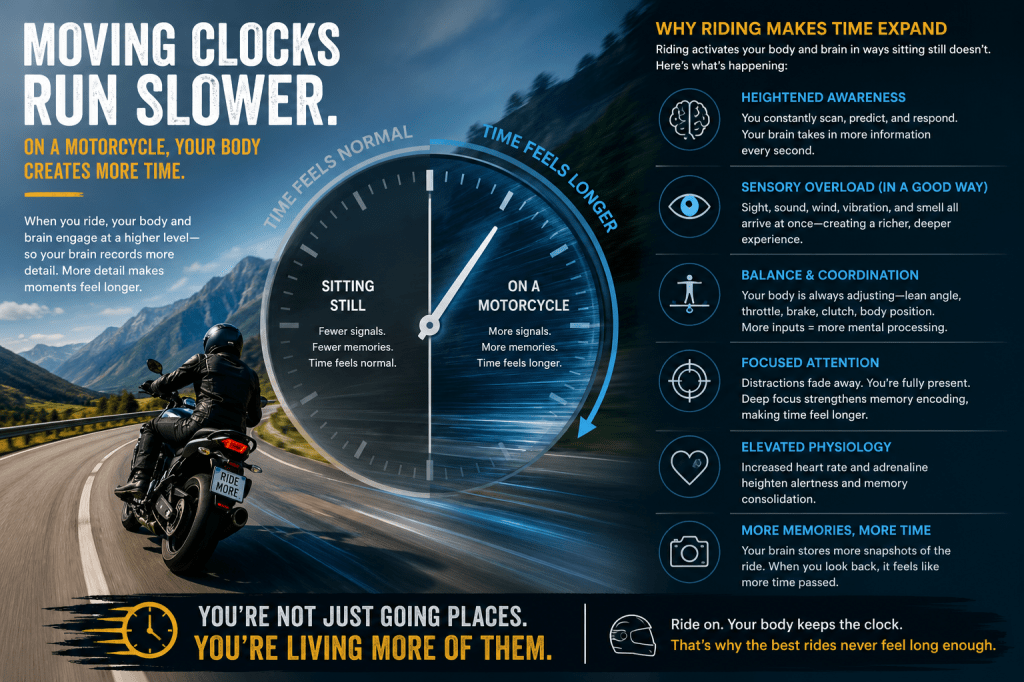
Motorcycling, bicycling, one-wheeling, skiing, etc., awaken us. We operate something that demands our full attention and our attention rises to the need — else we get hurt.

I experience motorcycling as a whole body and mind workout. My blood pressure decreases to normal. On longer rides I think profound thoughts. In dense highway traffic I’m surviving and mitigating threats.

When I was flying frequently…

there was the “hundred dollar hamburger.” On a motorcycle, there is the $25 bacon and eggs.

My transition from flying to motorcycling has brought less expensive and more frequent adventures — but I miss flying and motorcycling together.

Compare and contrast

My use case is tarmac and maybe a groomed dirt road. When cruising on local freeways I often target 80 mph. I prefer to keep all of the excitement in front of me where I can mitigate risks.

I have ASA on both my 1300 GSA and my 1300RT. I’m good with the automated clutch — no left hand pain in traffic.

Your observation is spot on. If you feel like the classic weekend buzz at the Rock Store isn’t what it used to be, you aren’t imagining things. The scene in the Santa Monica Mountains has shifted dramatically over the past 20 years, driven by a mix of local pressures and a massive structural evolution in the broader motorcycling world.
The empty spaces on the asphalt come down to a combination of hyper-local changes and shifting industry macro-trends.

The Local Factor: Pressure on Mulholland

For decades, the Rock Store was the undisputed anchor of Southern California’s canyon culture. However, several distinct local shifts have thinned out the weekend crowds:

  • Intense Law Enforcement & Road Closures: Heavy policing by the CHP and Sheriff’s department on Mulholland—specifically targeting “The Snake” just west of the store—became standard practice to curb reckless riding and drifting cars. Citations, impounds, and physical modifications to popular pullouts eventually drove the high-speed crowd away.
  • The 2018 Woolsey Fire: The fire devastated the surrounding canyons and nearly claimed the Rock Store itself. The subsequent months of road closures, melted infrastructure, and landscape damage permanently disrupted long-standing weekend riding routines.
  • Cultural Shifts: The passing of legendary owner Ed Savko in 2012 marked the end of an era. While the venue remains an iconic landmark, many riders who used to log hours hanging out on the patio have migrated to less-policed, quieter tarmac elsewhere in the region, or they skip the social showcase entirely to head straight out to the coast.

The Macro View: Is Motorcycling Declining?

Looking at the bigger picture, the answer is nuanced: overall volume is softening, but the culture is actually transforming rather than dying.
According to data from the Motorcycle Industry Council (MIC), new motorcycle sales in the U.S. dropped by about 7.6% recently, face heavy macroeconomic headwinds, and are feeling the weight of serious sticker shock. Premium, tech-heavy machines frequently push past the $20,000 to $30,000 mark, pricing out many casual enthusiasts.
The changing landscape is defined by two major shifts:

1. The Demographic Hand-off

The core generation of riders who fueled the massive cruiser and sportbike boom of the late 1990s and 2000s are gradually aging out and hanging up their helmets. Younger generations are entering the market at a slower rate, and when they do, they approach riding differently. They tend to favor smaller, more agile, and utilitarian bikes under 750cc over heavy chrome or pure racing replicas.

2. The Flight to Adventure (ADV) and Dual-Sport

While traditional on-highway segments like heavyweight touring (down 13%) and cruisers (down 6%) are losing ground, Adventure touring is booming. Category Market Trajectory Traditional Touring / Cruisers Steady decline; older buyer base aging out. Sportbikes ( Growing; driven by younger riders looking for lightweight agility. Adventure (ADV) / Dual-SportMassive growth (up over 50% since 2019); the current dominant force in premium motorcycling. Riders have collectively shifted their focus away from the old “canyon carving” or highway cruising mindsets. The energy in the community has largely moved toward multi-day exploration, fire roads, and long-distance backcountry discovery. So, while you might see fewer sportbikes scraping pegs on the asphalt right outside the Rock Store on a Sunday morning, it’s often because those riders are further out out of state, tracking dirt trails, or exploring remote backroads on highly capable adventure platforms. The passion hasn’t disappeared—it just packed its bags and went off-grid.

If by “downtown New York City” you mean areas such as Lower Manhattan, the Financial District, Tribeca, and surrounding streets, the average ambient sound pressure level is typically about 70–75 dBA (A-weighted decibels) during daytime street activity.  

For context:

Environment

Typical Sound Level

Quiet suburban neighborhood

40–50 dBA

Normal conversation

60–65 dBA

Downtown Manhattan street

70–75 dBA

Heavy Midtown traffic

70–85 dBA

Motorcycle

~88 dBA

NYC subway platform

~94 dBA average

Jackhammer

~110 dBA

A large NYC street-noise study found an average street-level noise exposure of 73.4 dBA, with measurements ranging from about 56 dBA to 95 dBA depending on location, traffic, construction, and time of day.  

For comparison to motorcycle riding:

  • Downtown Manhattan at 73 dBA is roughly 1/100th the acoustic energy of a 93 dBA environment.
  • Every 10 dB increase represents about 10× more sound energy.
  • Typical motorcycle helmet noise at freeway speeds is often 90–105 dBA, substantially louder than standing on a downtown NYC sidewalk.  

Given your interest in motorcycle hearing protection, a downtown Manhattan street is generally similar to riding a motorcycle at very low speed with a good helmet and windshield, while freeway riding is dramatically louder.

What does ChatGPT find for me?

There are several people named Jim/James Causey online, but one stands out strongly as a biomedical engineer and diabetes-device innovator—likely the individual you’re asking about.

Overview

James Causey is a biomedical engineer with more than 30 years in diabetes technology, insulin pumps, continuous glucose monitoring (CGM), and automated insulin delivery (AID) systems. Public profiles describe him as a former R&D leader at MiniMed/Medtronic, consultant to multiple diabetes-device companies, CEO of Simimed, and a prolific inventor.  

Career Highlights

  • Led development of several landmark MiniMed insulin pumps, including the 507C, 508, and Paradigm 511 systems during MiniMed’s growth years before its acquisition by Medtronic.  
  • Held senior R&D and innovation roles with companies including MiniMed, Medtronic, Insulet, Bigfoot Biomedical, and Optiscan Biomedical.  
  • CEO of  Simimed, Inc.⁠Attachment.png, a consulting and development company focused on diabetes technologies.  

Patents and Inventions

A large number of patents and patent applications are associated with James Causey, covering:

  • Insulin pumps
  • Automated insulin delivery systems
  • Closed-loop (“artificial pancreas”) technologies
  • Wireless pump control
  • CGM integration
  • Drug-delivery mechanisms
  • Medical device communications and cloud connectivity

Patent databases show numerous granted patents and published applications with Causey as inventor or co-inventor.  

Publications and Thought Leadership

James Causey maintains a diabetes-industry newsletter called:

Jim Causey’s Diabetes Devices Notebook⁠

The publication discusses diabetes technology, CGMs, insulin pumps, automated insulin delivery systems, regulatory developments, and industry trends.  

Academic Impact

A public Google Scholar profile for James Causey lists him as CEO of Simimed and shows substantial citation activity related to diabetes management, glucose sensing, and wearable medical devices.  

Historical Contributions

Public posts and patent records indicate involvement in several early innovations that became commonplace in modern diabetes therapy, including:

  • Wireless remote control of insulin pumps
  • User-assistance and decision-support systems for insulin therapy
  • Integrated pump/CGM architectures
  • Early concepts that evolved into modern hybrid closed-loop systems  

Reputation in the Industry

Within the diabetes-device sector, James Causey is generally known as a long-time insulin-pump and CGM developer who participated in multiple generations of diabetes technology from the early MiniMed era through current automated insulin delivery systems.  

If you’d like, I can also compile a chronological career timeline, a patent count analysis, or a history of his role in the development of MiniMed insulin pumps.